
Everyone arrives in Paris with a checklist: see the Eiffel Tower sparkle, get lost in the Louvre, eat a perfect croissant. I did too on my first few trips. But my most memorable visits, the ones that truly connected me to the city's soul, happened when I started looking for the stories hiding just beneath the surface.
Paris isn't just beautiful; it's a city built on layers of incredible history. Knowing a few of its secrets transforms a simple walk into an adventure. Suddenly, an old bridge isn't just a bridge, and a charming neighborhood reveals its rebellious, artistic past.
This isn't a list of trivia. This is your key to seeing Paris with new eyes. Here are 10 historical curiosities that will enrich every moment of your trip.
1. You're Walking on Ancient Rome (Literally)
It’s hard to imagine, but the chic, winding streets of the Latin Quarter sit directly on top of an ancient Roman city called Lutetia. Founded in 52 BC, this was a major Gallo-Roman hub. So when you're there, don't just see the old buildings. Unveiled Tip: Visit the Arènes de Lutèce, a rediscovered 1st-century Roman amphitheater hidden in a quiet park. It’s a surreal experience to see locals playing pétanque where gladiators once fought.
2. The Eiffel Tower Was the Most Hated Landmark in Paris
The icon of Paris was originally built as a temporary entrance for the 1889 World's Fair and was despised by the city's artistic elite, who called it a "monstrous" factory smokestack. It was scheduled to be torn down after 20 years. The Secret: Gustave Eiffel saved his tower by proving its worth as a radio antenna. It became a military hero in WWI, intercepting enemy communications and helping to change the course of the war.
3. The Louvre Was a Grim Medieval Fortress
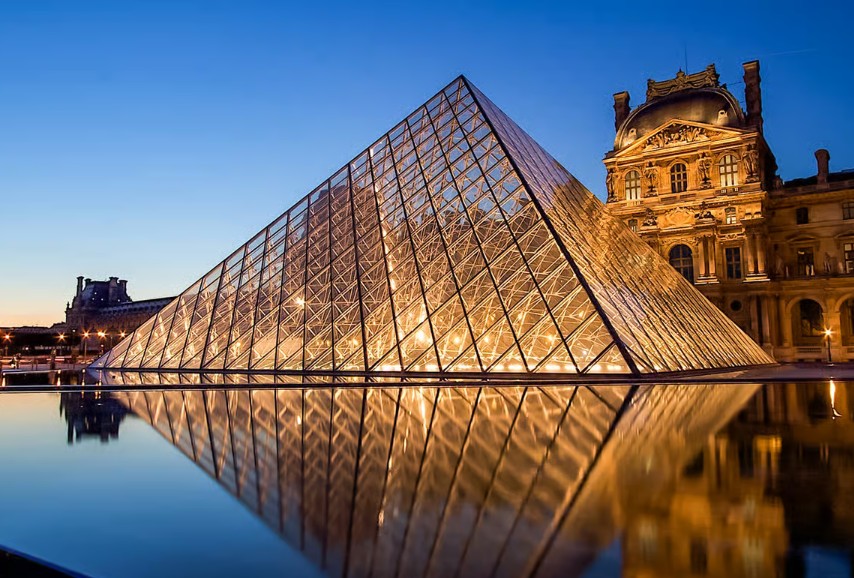
Before it was home to the Mona Lisa, the Louvre was a formidable fortress built in the 12th century to defend Paris from invaders. It was later converted into a royal palace before finally opening as a public museum after the French Revolution. Unveiled Tip: When you visit, don't just rush to the famous artworks. In the basement, you can still walk among the original foundations of the medieval fortress—a powerful reminder of the building's long and layered history.
4. Notre-Dame Was Saved by a Novel
By the 1800s, after the French Revolution, Notre-Dame was in ruins and close to being demolished. It was Victor Hugo's sensational 1831 novel, Notre-Dame de Paris (The Hunchback of Notre-Dame), that created a massive public outcry, shaming the city into restoring the cathedral to its former glory. It's a stunning example of how art can literally save architecture.
5. There's a Secret Vineyard in Montmartre
Montmartre is famous as the bohemian hub where artists like Picasso and Van Gogh lived and worked. But it holds another secret from its days as a village outside the city walls: the Clos Montmartre. It's the last remaining working vineyard in Paris, a tiny, charming plot of land that produces a small batch of wine each year. It’s a beautiful, quiet reminder of the area's rural past.
6. The "New" Bridge is Actually the Oldest
Its name means "New Bridge," but the Pont Neuf is actually the oldest standing bridge in Paris, completed in 1607. What made it "new" was its revolutionary design: it was the first bridge in the city built without houses on it and the first to have sidewalks, a modern innovation to protect pedestrians from the mud and chaos of horse-drawn traffic.
7. The Catacombs Hold the Remains of 6 Million Parisians
Beneath the streets of Paris lies a dark and fascinating secret: a 200km network of tunnels lined with the bones and skulls of over six million people. In the late 18th century, the city's cemeteries were overflowing. To solve this public health crisis, the remains were exhumed and artistically arranged in the tunnels of former limestone quarries. A visit here is a macabre but unforgettable history lesson.
8. Paris Cafés Weren't Just for Coffee—They Were for Revolution
The Parisian café culture we love today wasn't just about enjoying an espresso. Establishments like Café Procope were the intellectual and political hubs of the 18th century. Philosophers like Voltaire and Rousseau met here, and their passionate debates over coffee helped fuel the ideas that led to the French Revolution. When you sit in a historic café, you're sitting in a room where the modern world was born.
9. The Flame at the Arc de Triomphe Hasn't Gone Out in 100 Years
Beneath the Arc de Triomphe lies the Tomb of the Unknown Soldier from WWI. Since 1923, an eternal flame has burned in his honor. The Secret: Not even the Nazi occupation during WWII could extinguish it. Every single evening at 6:30 PM, a solemn ceremony is held to rekindle the flame. It's a quiet, powerful, and completely free ritual that connects you to the resilient soul of France.
10. Paris Has Its Own Statue of Liberty
Everyone knows the Statue of Liberty is in New York, but it was a gift from the French. As a sign of their enduring friendship, the American community in Paris gifted a quarter-scale replica back to France. Unveiled Tip: You can find this smaller, but no less inspiring, Lady Liberty on the Île aux Cygnes, a narrow man-made island in the Seine, not far from the Eiffel Tower. It's a wonderful, off-the-beaten-path discovery.
Unlock Paris with a Single Pass
Seeing all these historical layers can feel daunting. The best way to dive deep into the city's culture without the stress of buying individual tickets is with a multi-day museum pass. It's perfect for exploring the Louvre, climbing the Arc de Triomphe, and dozens of other sites at your own pace.
For the freedom to explore, I recommend the Paris Museum Pass. It’s a fantastic way to make the most of your time and money.